
Forum Newsletter – March 2026
Chisenhale and the Mayor’s Accelerated Housing Programme (MAHP)
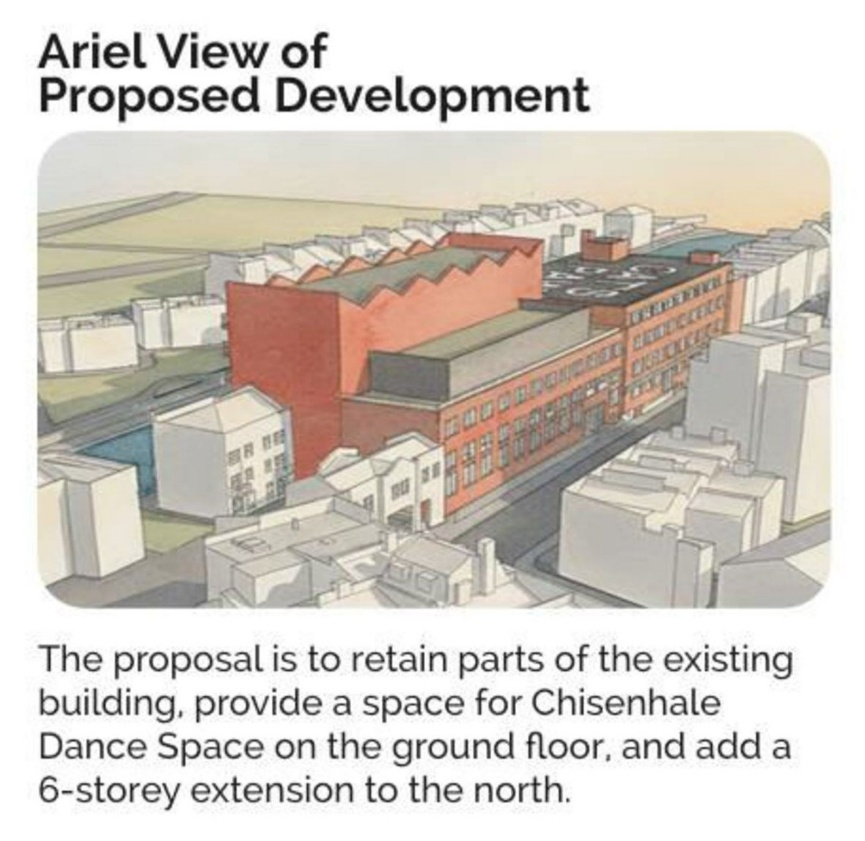
Chisenhale Works
Chisenhale was built as a factory during the 2 nd World War. Following the factory’s
closure in 1972, the Council bought the building. In the 1980s a group of dancers
and artists negotiated a lease with the Council, and restored a substantial part of the
building. Their story is told on the Chisenhale website.
Chisenhale Arts Place now
Chisenhale describe their work as follows: ‘Today, Chisenhale Art Place thrives as
a multi-purpose arts organisation home to three distinct initiatives –
Chisenhale Dance Space, Chisenhale Gallery and Chisenhale Studios – each
operating programmes that enable artists and dancers of all experiences to
develop, experiment and create exceptional work. CAP creates extensive
opportunities for communities and audiences to participate, learn and engage.’
Chisenhale Gallery retains its status as an Arts Council England National Portfolio
Organisation until at least 2027/8, one of 990 arts sector organisations across the
country committed to bringing the best creative activities and cultural ideas to East
London.
Current uncertainty for the Chisenhale charities
CAP is a major arts and education resource for East London, yet their lease on the
building ends in December 2031, with the current rent level only secure until the end
of 2026.
The west side of the building, occupied by Godson’s brewery from 1979-82, has
been allowed to fall into disrepair over the past 40 years, despite efforts by
Chisenhale to restore the building for long-term community use.
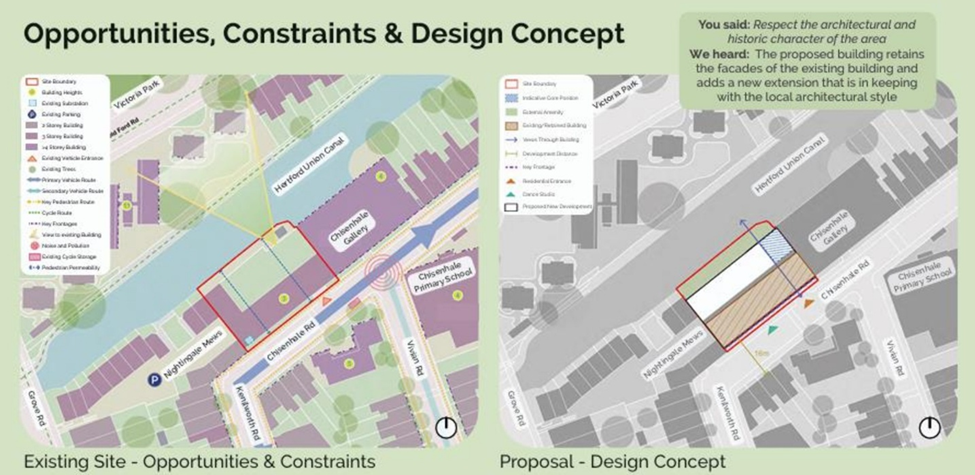
Future Potential of the site
A 2025 ‘Economic and Social Impact Statement’ by Avison Young documents the
important contribution Chisenhale makes to the surrounding area, and outlines a
strategy for unlocking the significant potential of the site. The report acknowledged
that:
‘….urgent improvements are required to enhance its usability,
accessibility, and environmental performance across the site. A long-term
affordable lease from LBTH will provide the stability needed for CAP to plan a
sustainable future and secure external investment—without requiring direct
financial support from the council.’
Given this vison and past efforts to rebuild the derelict western part of the building for
community use, it was a blow when it was learnt that the western section of the
building was included in the current Mayor’s Accelerated Housing Programme.
Chisenhale’s response to the proposals
CAP appreciate this is a once-in-a-generation opportunity for the strategic
development of the site, including housing, so long as this is paired with a coherent,
whole-building approach that allows Chisenhale to secure their long-term future and
secure needed investment across the rest of the building.
It makes little sense to deliver new housing while leaving the rest of the building to
deteriorate — particularly given that the three charities function together as a whole.
Chisenhale as a pro-active partner in development
In terms of Chisenhale’s contribution, they see themselves as an active partner in
the development process. They are in conversation with the Arts Council, National
Lottery Heritage Fund and GLA about funding opportunities, but lease security is
essential to securing capital investment from external funders.
It also makes practical and logistical sense to coordinate the building works as a
whole, particularly as the Dance Space will need to be re-provided, and there will be
inevitable disruption to all users of the building during the construction phase of the
new housing.
Reece McMahon, Executive Director, recently wrote: ‘With the support of our
partners and stakeholders, there is a real opportunity here to align LBTH’s
housing and regeneration objectives with CAP’s ambitions to improve
accessibility, upgrade the building fabric and services, expand education and
community space, and improve public access — safeguarding and amplifying
the site’s existing social value.’
‘Community Conversation’ on the Proposals
There are two opportunities to talk with representatives from Council and its
development partners:
Monday 9th March 4-7pm and Saturday 14th March – 10am – 1pm
Venue: St Paul Old Ford, Saint Stephen’s Road, Bow E3 5JL
Bow Wharf tribunal hearing postponed
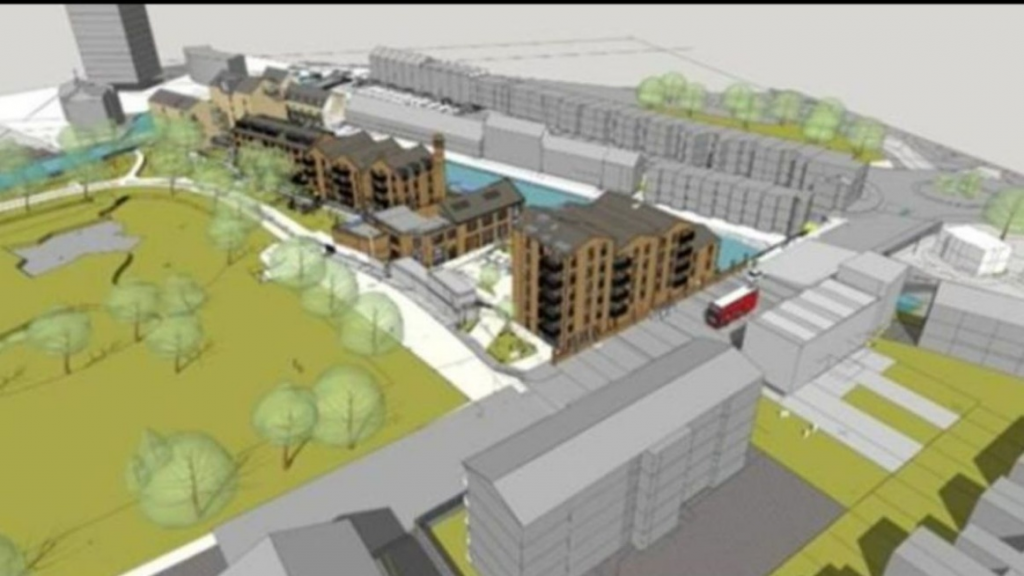
The appeal by the Canal & River Trust against the Information Commissioner’s
decision concerning the sharing of a heritage report has been put back from the
original date of 27th March.
This is to allow more time for evidence to be gathered and shared between the
parties. The judge has said the date will now be sometime on or after 19th June.
The judge has also decided that half a day will be adequate to deal with the central
legal point. This is whether or not the Canal & River Trust hold the heritage report
underpinning its 2025 planning application within the meaning of the Environmental
Information Regulations (EIR). The EIR provide legal rights for the public to access
environmental information held by public authorities.
The Trust is arguing it doesn’t hold the report under the EIR and so does not need to
share it (although it acknowledges possessing the report). They argue it was
commissioned by their private partnership with a developer, and being private, the
partnership is not subject to EIR.
The planning application for 66 flats and one small commercial space was refused
by Tower Hamlets early in December 2025, and appeals usually have to be made
within 6 months.
The Trust overcame a refusal to their 2011 application for 34 flats and a cafe on
appeal in 2014. This was primarily due to negotiating a Section 106 agreement with
the Council to make financial contributions towards community facilities, health and
public transport, and meeting certain conditions regarding the affordable housing
element of the development.
It is possible the Canal & River Trust will appeal this latest planning refusal and offer
to negotiate a similar financial package with the Council.
The appeal by the Canal & River Trust against the Information Commissioner’s
decision concerning the sharing of a heritage report the Trust has been put back
from the original date of 27th March.
This is to allow more time for evidence to be gathered and shared between the
parties. The judge has said the date will now be sometime on or after 19th June.
The judge has also decided that half a day will be adequate to deal with the central
legal point .This is whether or not the Canal & River Trust hold the heritage report
underpinning its 2025 planning application within the meaning of the Environmental
Information Regulations (EIR). The EIR provide legal rights for the public to access
environmental information held by public authorities.
The Trust is arguing it doesn’t hold the report under the EIR and so does not need to
share it (although it acknowledges possessing the report). They argue it was
commissioned by their private partnership with a developer and the partnership is
not subject to the EIR.
The planning application for 66 flats and one small commercial space was refused
by Tower Hamlets early in December 2025 and appeals usually have to be made
within 6 months.
The Trust overcame a refusal to their 2011 application for 34 flats and a cafe on
appeal in 2014. This was primarily due to negotiating a Section 106 agreement with
the Council to make financial contributions towards community facilities, health and
public transport and meeting certain conditions regarding the affordable housing
element of the development, including agreeing to 10% of the affordable units being
wheelchair accessible.
It is possible the Canal & River Trust will appeal this latest planning refusal and offer
to negotiate a similar financial package with the Council.